Tedious work
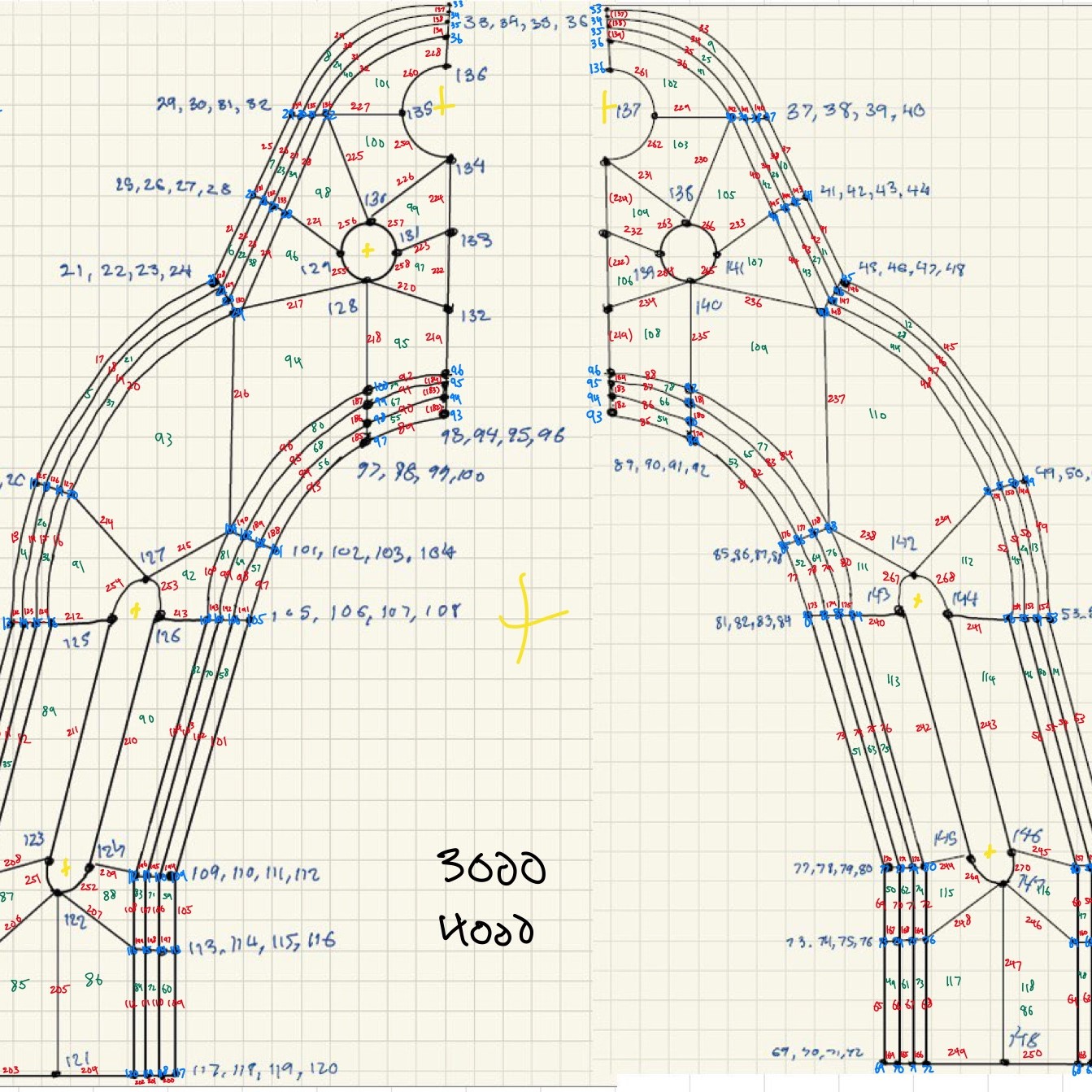
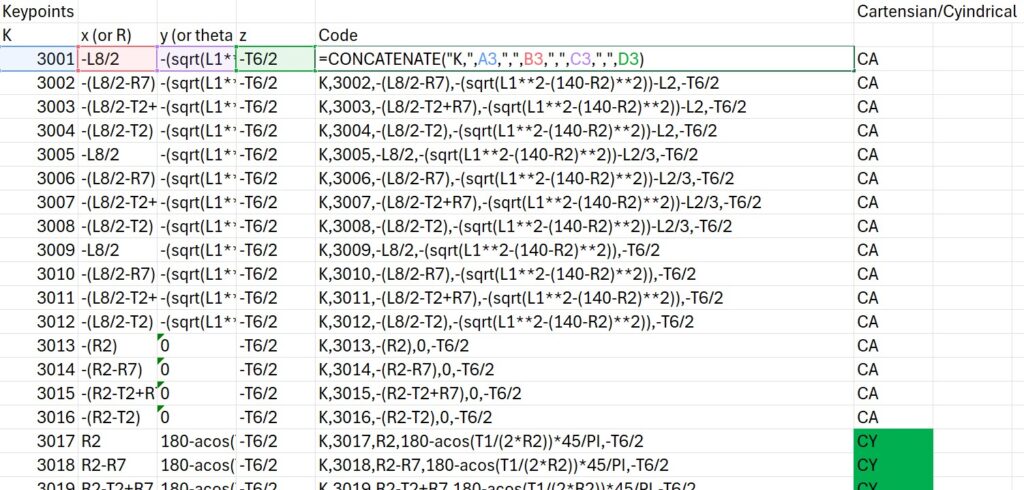
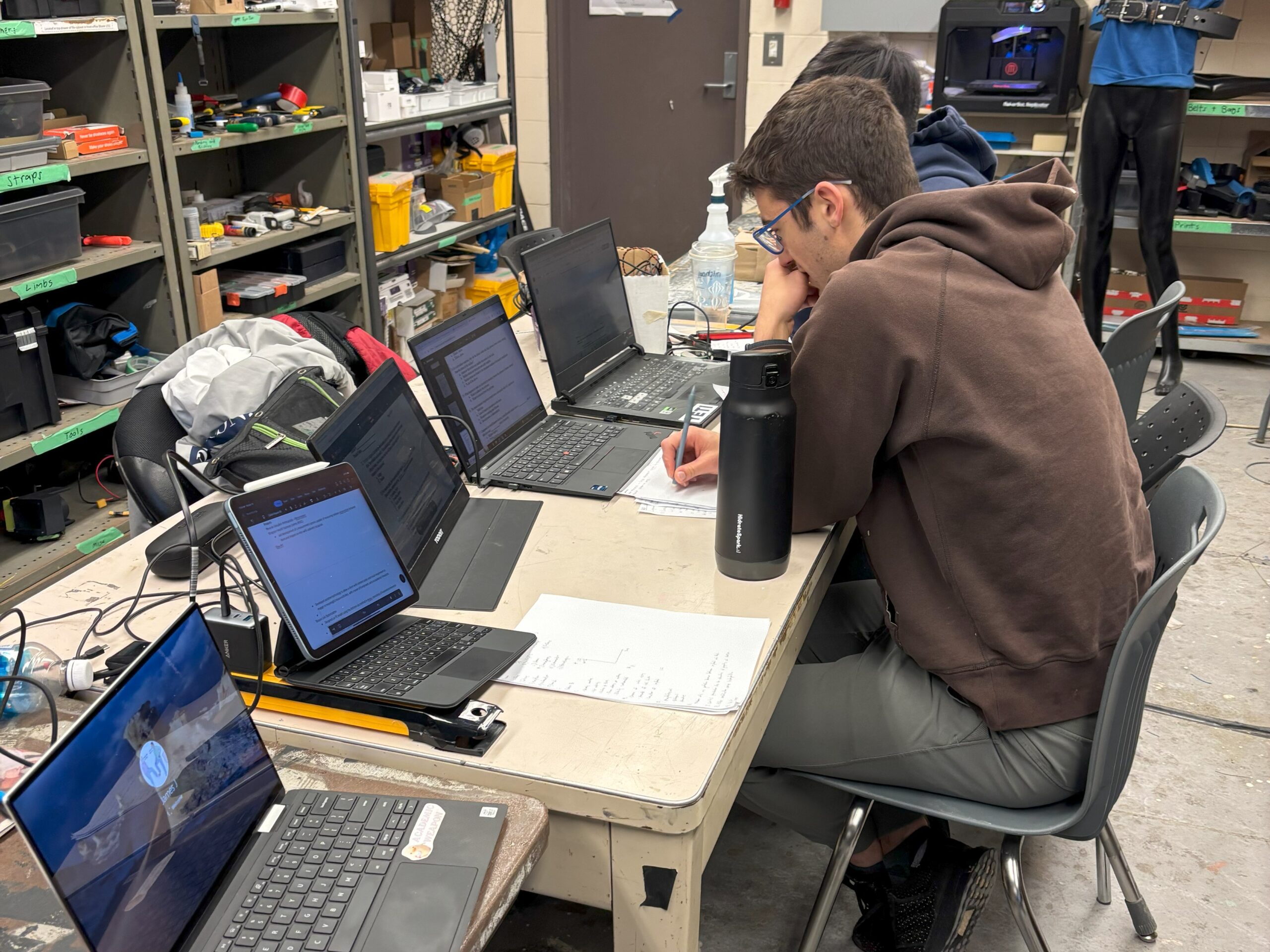
It was very tedious to create the FE model, perform the design optimization, and write the code to automate everything in Ansys. Excel was used to automate the code, but constant troubleshooting was conducted to verify it to prevent errors from cascading. A lot of the work was repetitive and it was easy to make minor mistakes in the code that then contributed to more time being spent troubleshooting. I learned the importance of organization and planning, especially when working with a team, to achieve successful results while working with time and resource constraints. The best way to save time later is to do things right the first time.
Complexity of the design
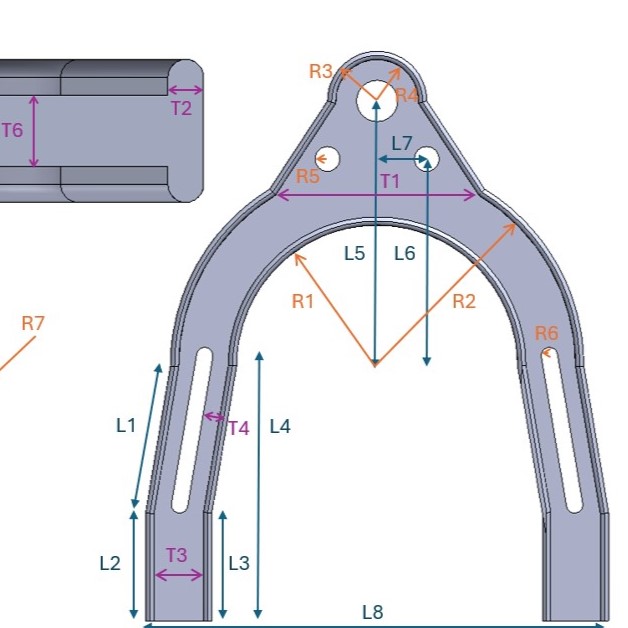
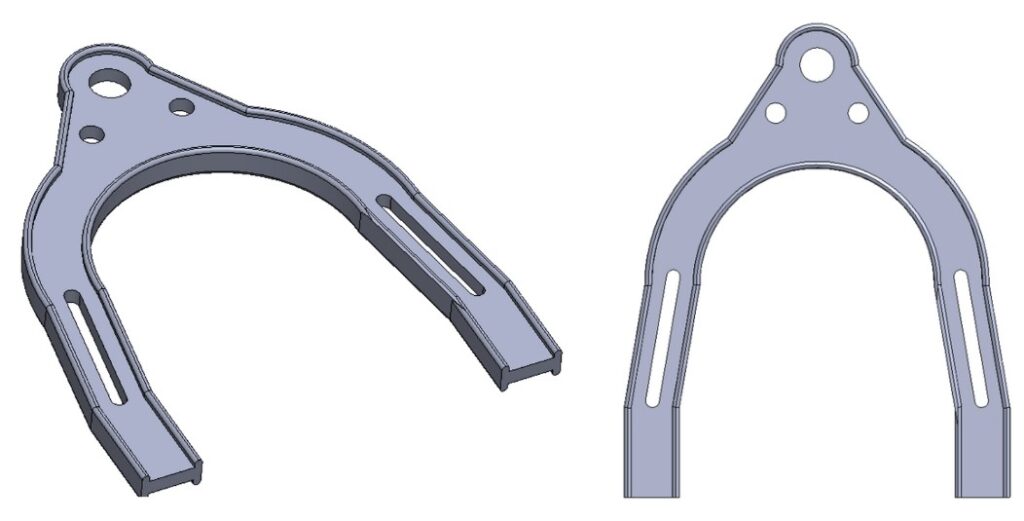
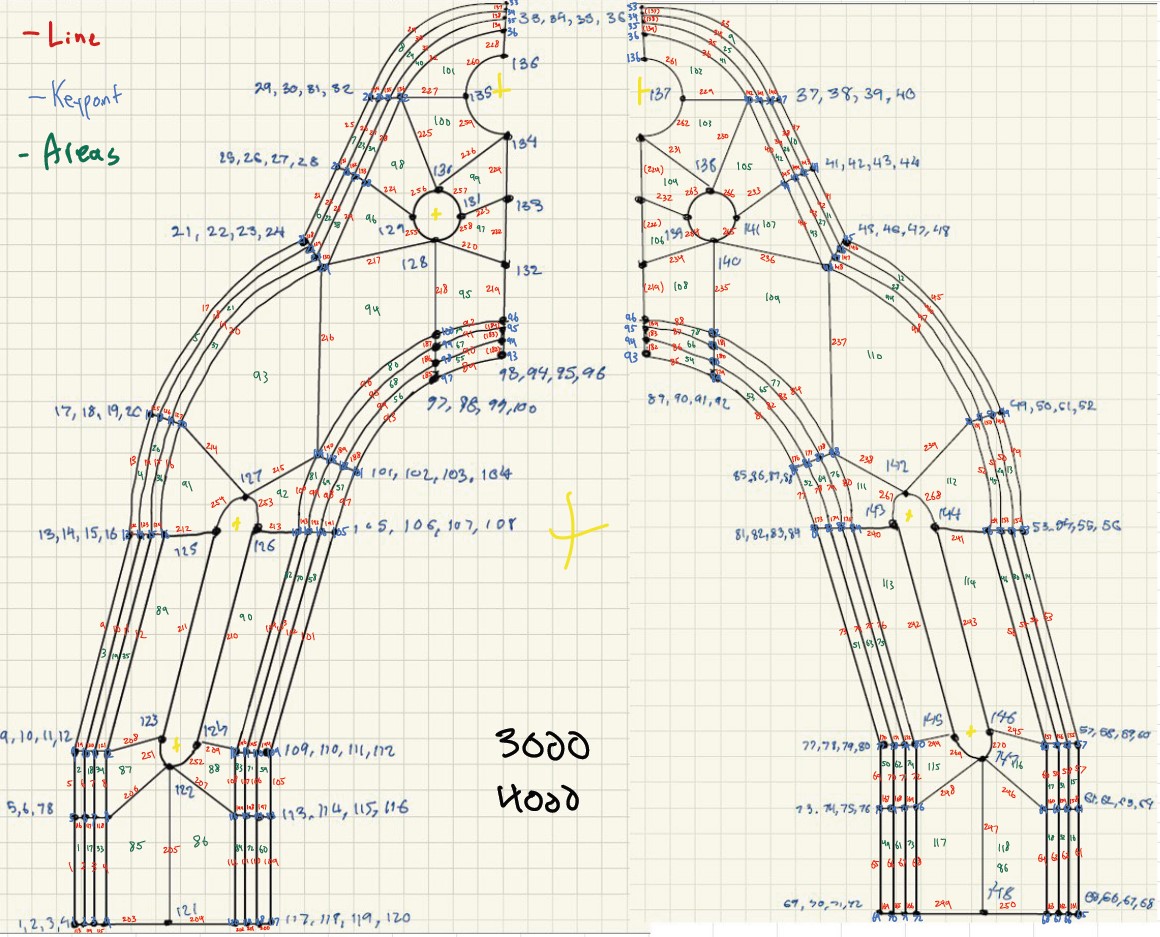
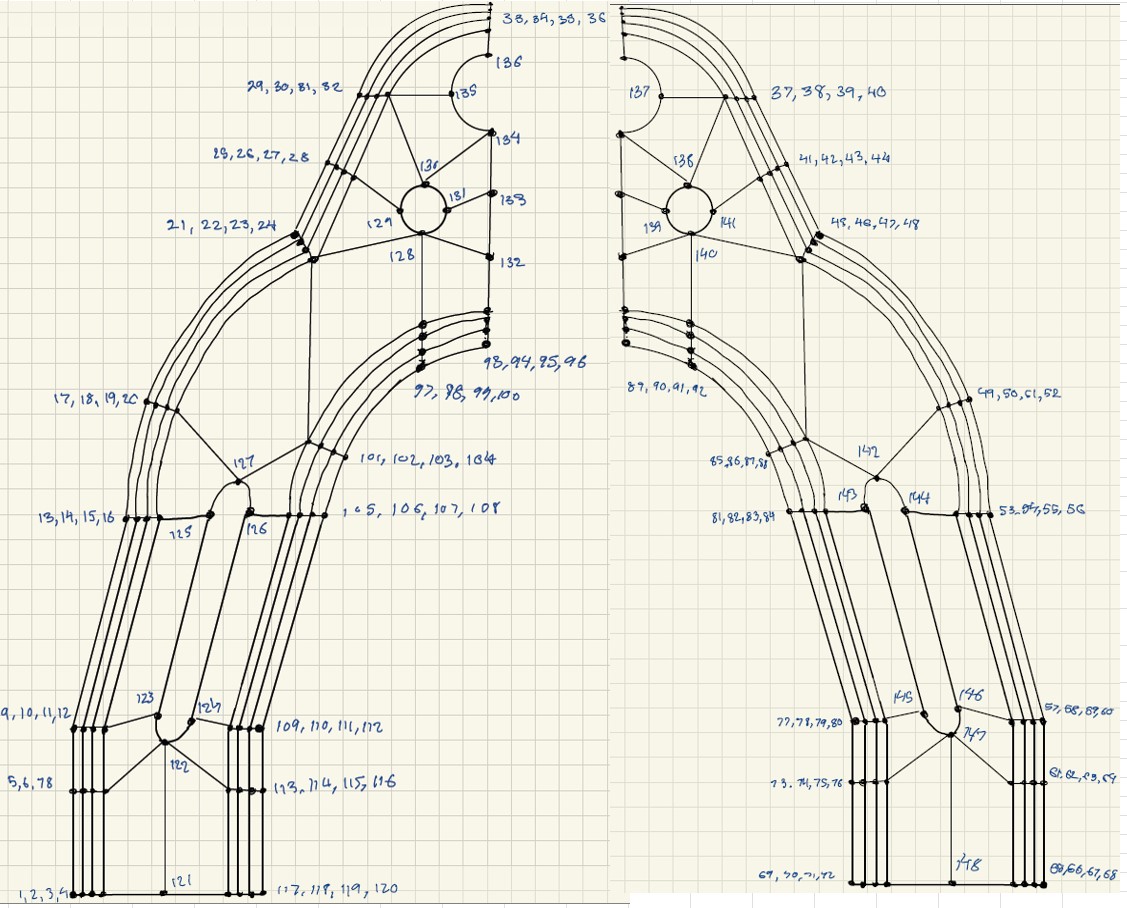
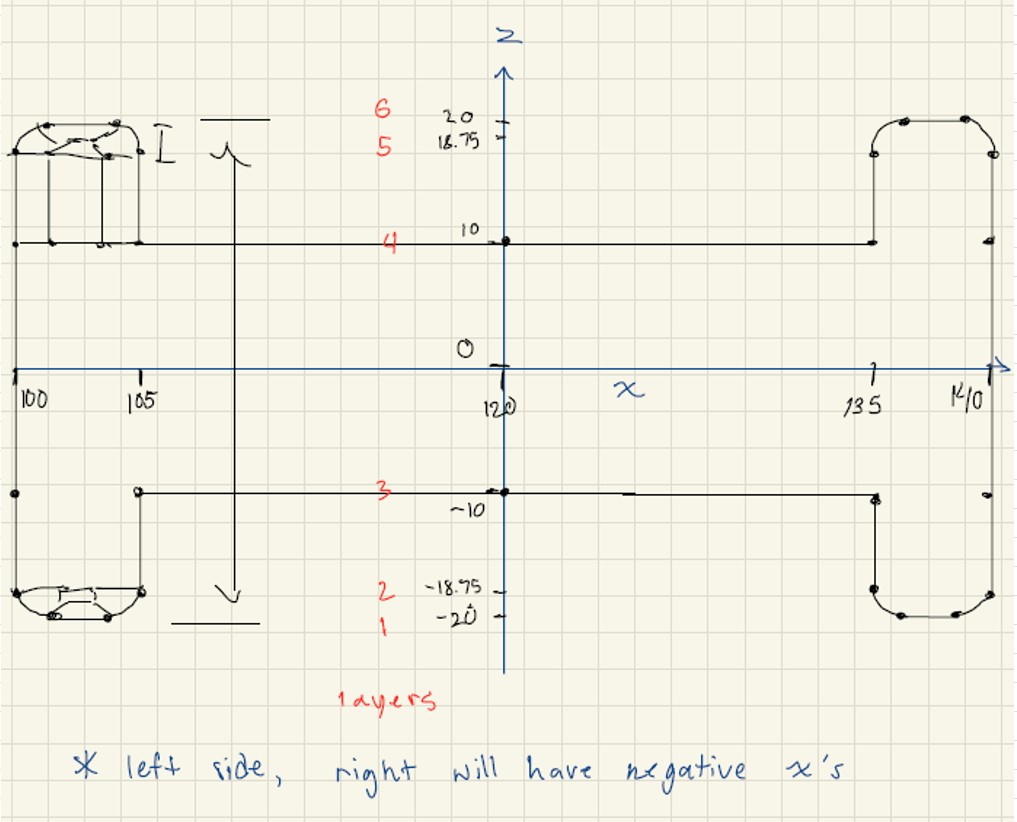
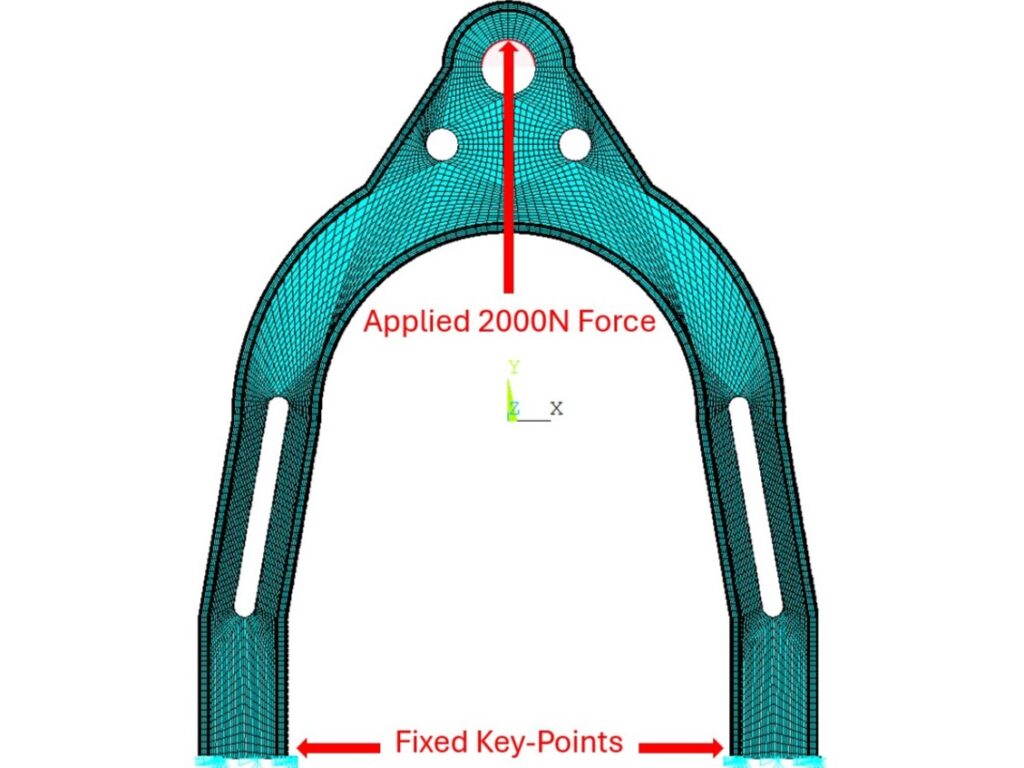
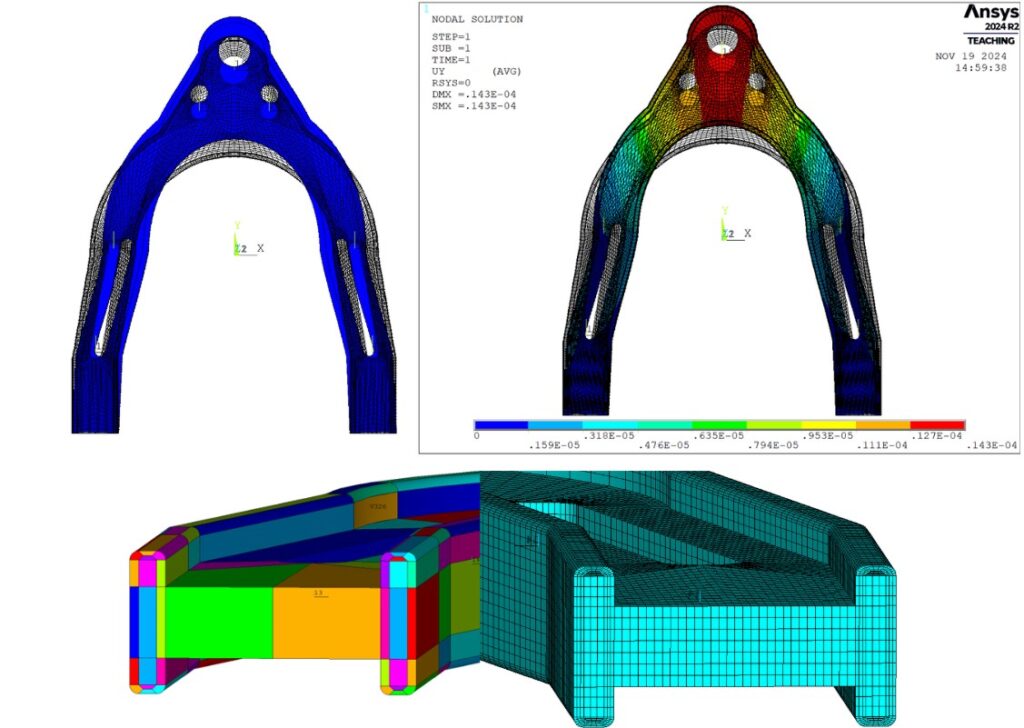
A high degree of planning, organization, and coordination was required for this project. The design featured 21 design variables, cut-outs, and fillets. It consisted of 8 layers, 510 volumes, 1766 areas, 2036 lines, and 776 key points. The complexity of the design contributed to the amount of tedious work and long processing times.
Long processing times
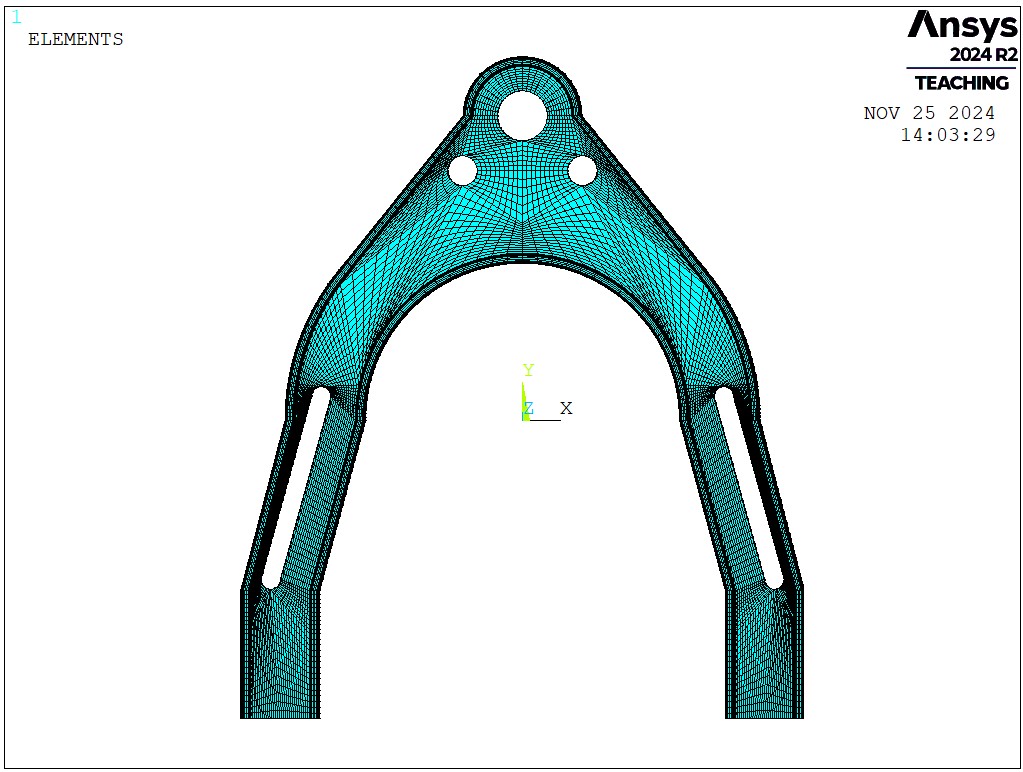
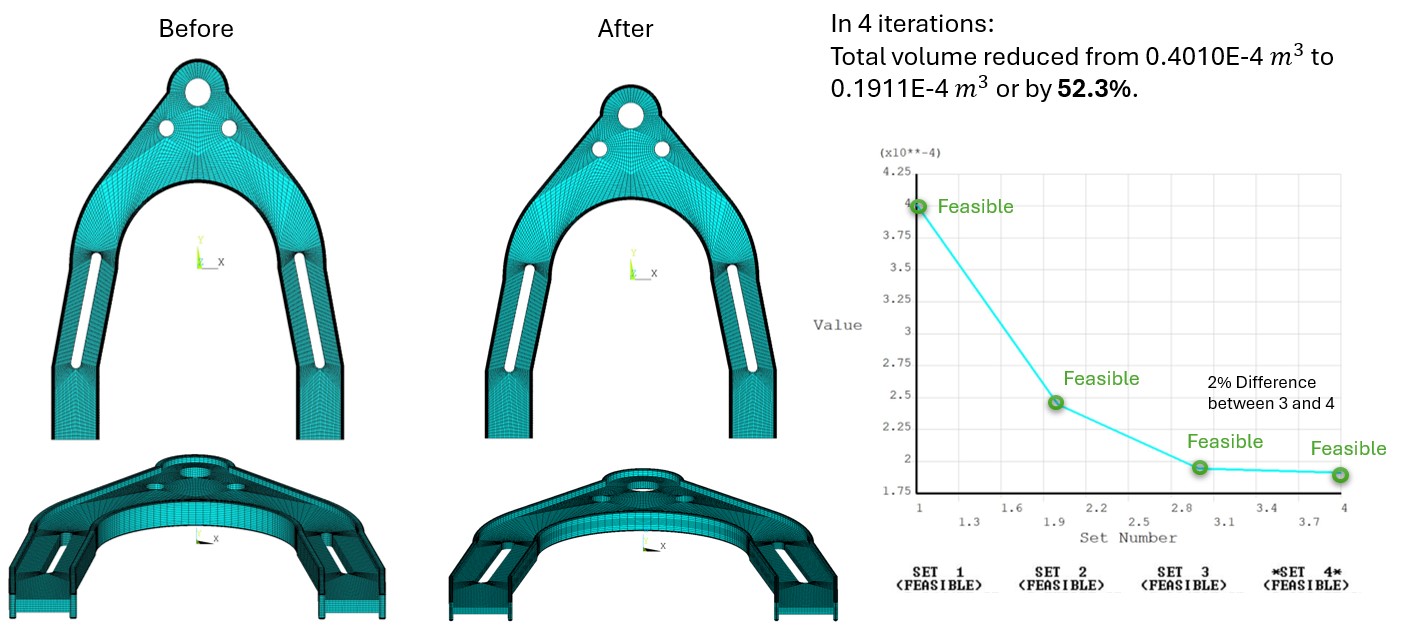
Running the code for creating the FE model took anywhere from 20 minutes to 1 hour, depending on the performance of each team member’s computer and whether or not the full code was being run. As we were troubleshooting, the 20-40 minutes it took to run sections of the code started to add up every iteration. Running the code for the design optimization took anywhere from 1-3 hours because of all the design variables and side constraints. We decided working in parallel, each focusing on only a few design variables at a time, would be the best use of time iterating. After everyone ran their iterations, we combined our findings to create an optimized FE model with a good quality mesh and were able to successfully perform 1 final design optimization.
Teaming
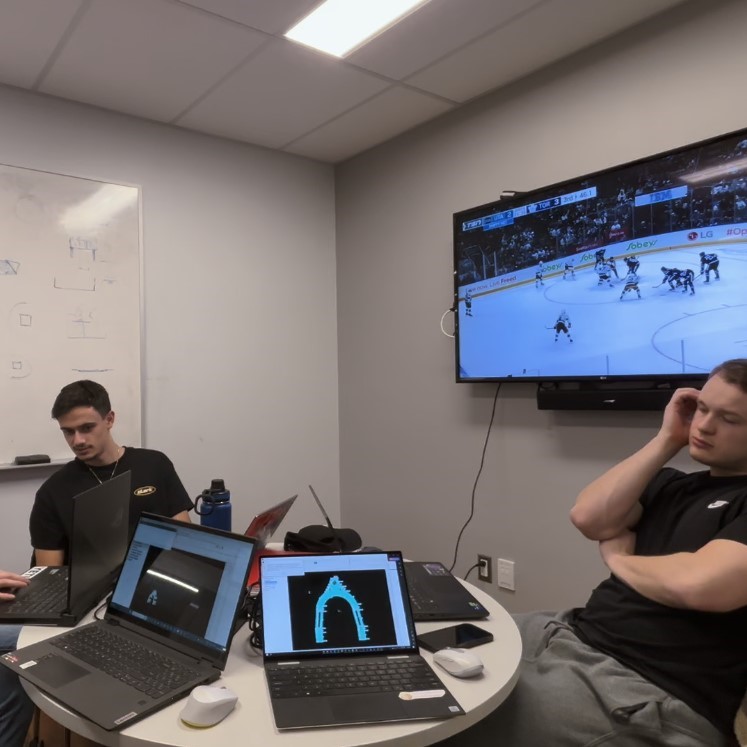
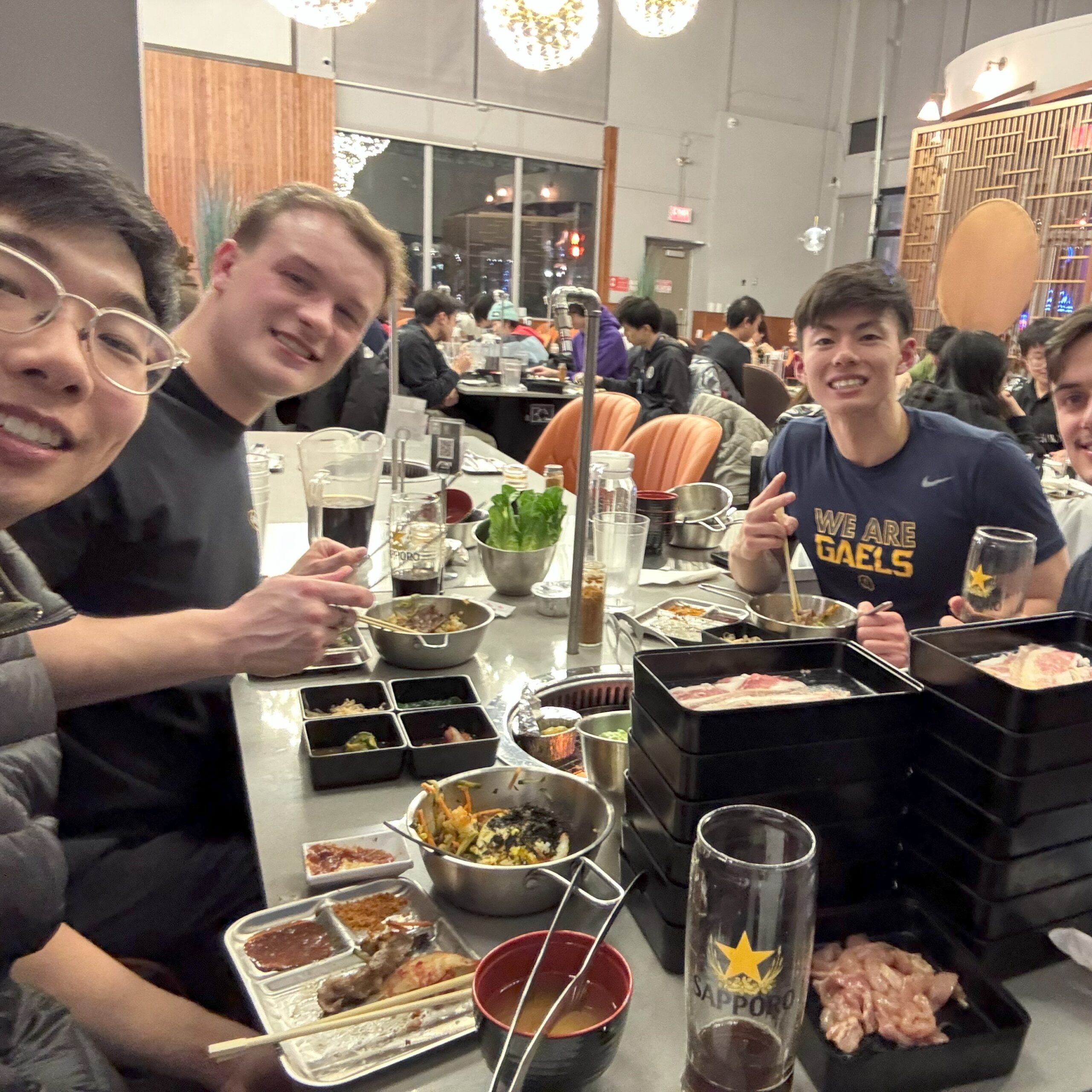
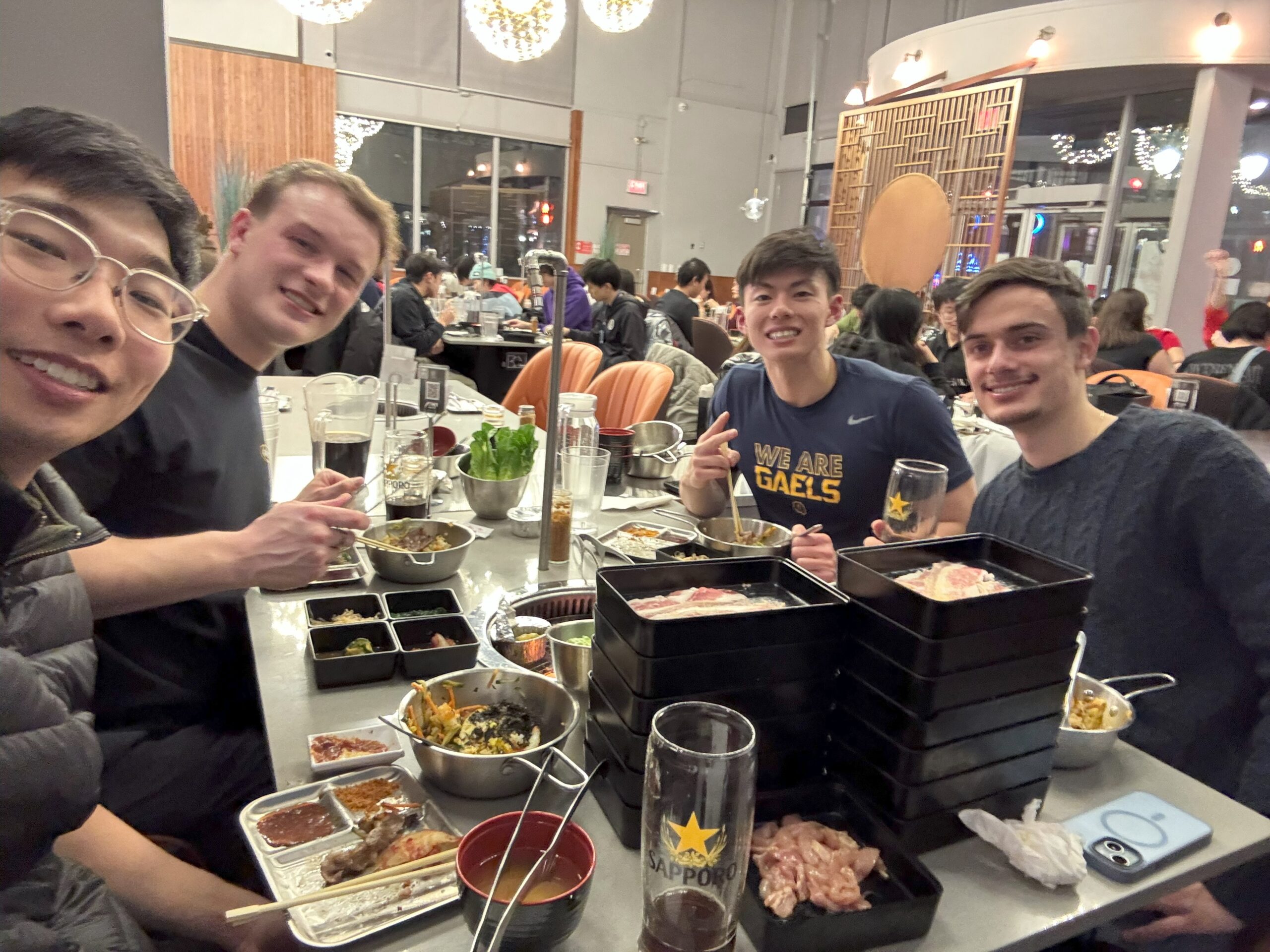
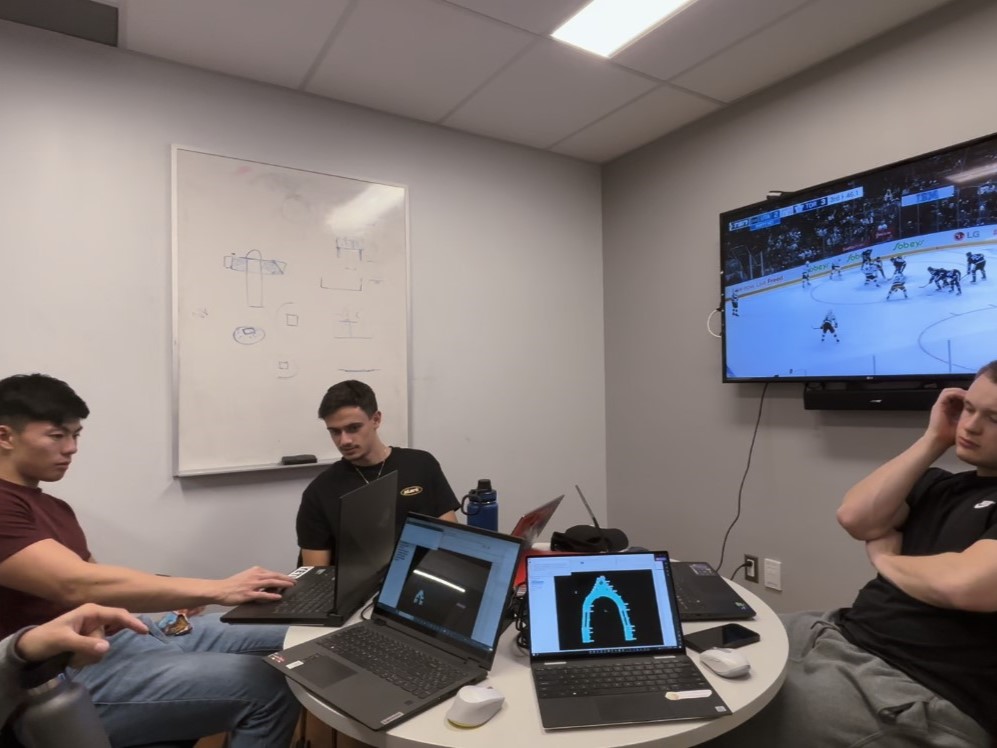
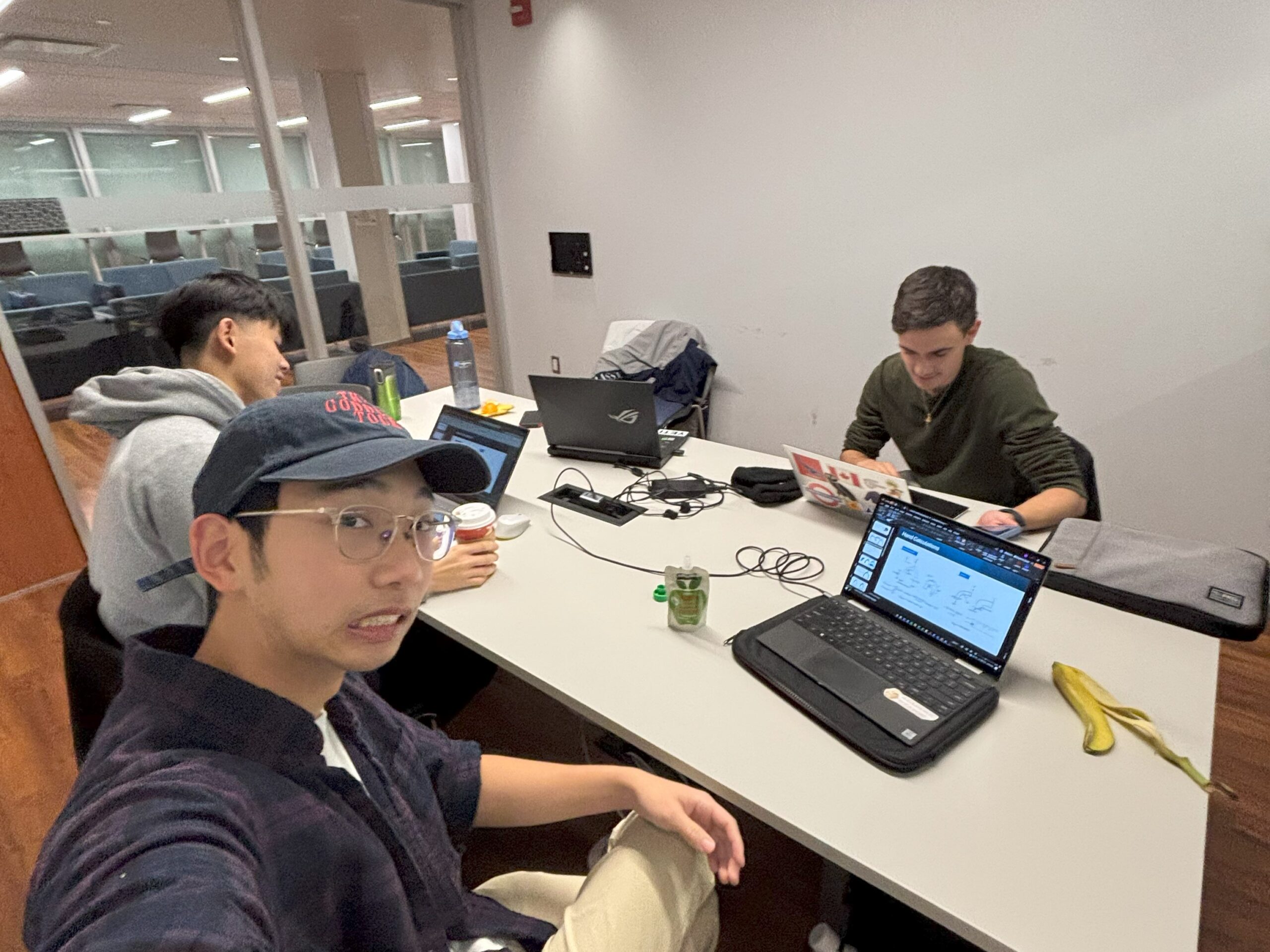
The team I worked with was very talented. In most of my prior teaming experiences, I’ve taken the leadership role to initiate team meetings, delegate tasks, and be aware of what everyone is working on. However, this team consisted of people who were also used to taking on the leadership roles in their past teams. It was a pleasant but unfamiliar experience for me working in a team where every member had a strong history of leadership and wanting to take ownership of the team. This taught me how to be a good team member even when I’m not in the usual position I’m used to; learning to adapt to identify and be willing to fill any gaps or needs within the team, holding myself accountable, and being an active contributor of ideas without being argumentative or inflexible.